


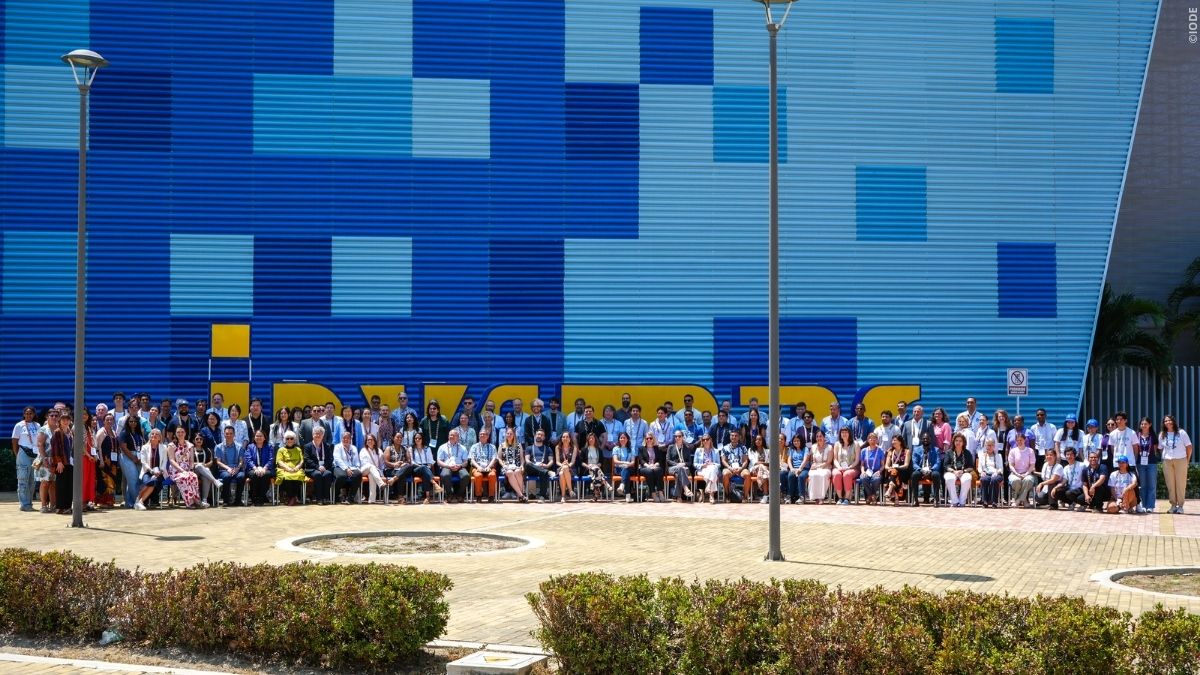
The third edition of the International Ocean Data Conference (IODC-3), hosted by INVEMAR in Santa Marta, Colombia, from 10-11 March 2025, gathered 400 participants worldwide—150 in-person and 250 online. MSPglobal led a session on the application of ocean data for Sustainable Ocean Planning and Management, which included input from experts across the globe.
This edition, IODC-3, brought together leading experts in marine biodiversity data, oceanography, information technology, and data science, as well as experts in ecosystem management, marine spatial planning (MSP), and even emerging topics of geodata management and marine governance in the Antarctic continent.
The conference underscored the importance of strengthening data infrastructure, improving accessibility, and fostering collaboration to ensure inclusive and equitable participation in the global digital ocean ecosystem.
On the second day of the conference, MSPglobal led session 4, which overall highlighted the critical role of data and technology in sustainable ocean management, particularly MSP as well as fisheries, marine conservation, and climate resilience. Natalia Solís-Miranda (UNESCO-IOC) made the start by highlighting MSPglobal’s progress in developing two Data Toolboxes for MSP practitioners, which has been done in collaboration with the International Oceanographic Data and Information Exchange (IODE) and the Global Ocean Observing System (GOOS) teams. One toolbox focuses on spatial data infrastructure, nearing completion, and the other on integrating ocean observations in MSP, both improving data accessibility for ocean governance.
From the overall 8 presentations, it became clear that achieving a unified future for ocean data requires greater interoperability, stronger interconnections, and seamless data integration, extending it beyond marine sciences into broader ocean research. For more details, please find a summary of the whole day two here and an overview of all key messages of MSPglobal’s session below.

Key messages of session 4: “Application of Ocean Data for Sustainable Ocean Planning and Management”
1. Data-driven decision-making is key to sustainable ocean planning and management
Multiple presentations emphasized the importance of integrating oceanographic, fisheries, and spatial data to guide marine conservation, climate adaptation, and fisheries policies.
2. Interoperability and standardization of data remain a major challenge
Harmonizing data formats, sources, and governance frameworks is crucial for effective transboundary MSP and sustainable blue economy initiatives.
3. Indigenous and local knowledge (ILK) must be embraced by MSP and ocean governance
Effective ocean management requires embracing ILK and ensuring the inclusive participation of local communities, including small-scale fishers and Indigenous Peoples.
4. Technology and digital tools are transforming MSP processes
Remote sensing and GIS assessments provide valuable insights for monitoring fisheries, assessing climate risks, and supporting MSP implementation.
5. Cross-sectoral and transboundary cooperation is essential
Successful MSP requires strong coordination between governments, private sectors, local communities, and regional organizations to address common challenges such as climate change, habitat loss, and overfishing.
6. Climate change remains a critical driver of marine and coastal transformations
The presentations highlighted the urgency of adaptive management, using real-time ocean data to develop climate-resilient policies and risk management strategies.
7. Cultural and historical aspects are required to be recognized in the decision-making while making a marine spatial plan
Underwater cultural heritage is an often overlooked yet valuable component of ocean sustainability and governance, providing historical context for marine resource management.
RELATED LINKS:
- MSPglobal 2.0 is co-developing a Data Toolbox to guide countries on leveraging Ocean Observation Data for MSP
- MSPglobal 2.0 is co-developing a Data Toolbox to support countries in developing their own Spatial Data Infrastructure
- IODC-3 Highlights
- IODC-3 Summary Day 1
- IODC-3 Summary Day 2
CONTACT:
MSPglobal.comm@unesco.org