


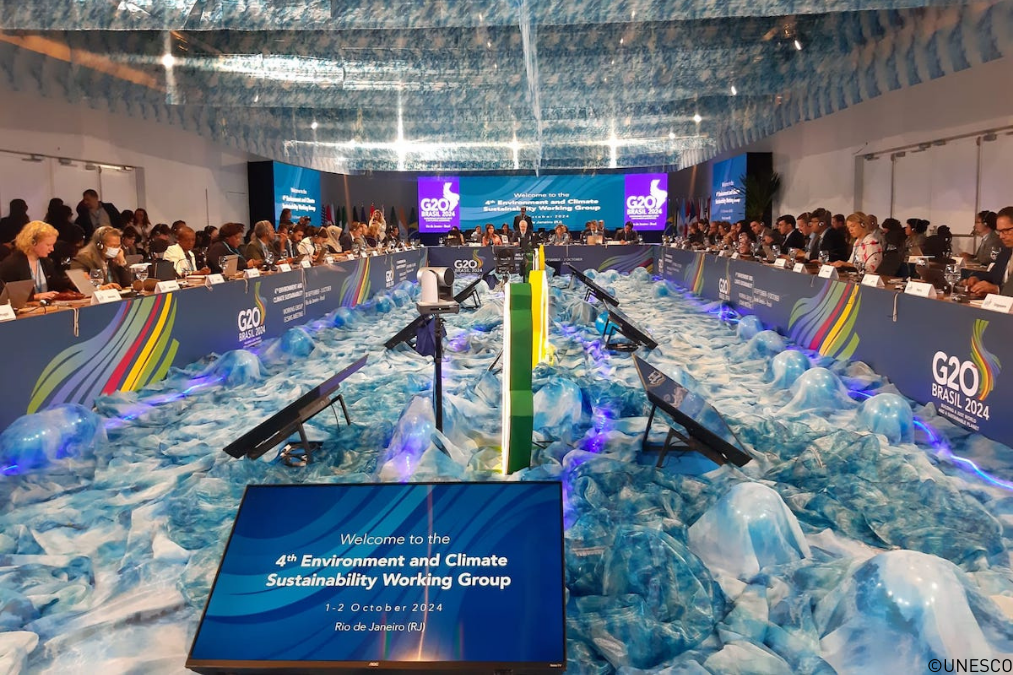
The ocean, our planet’s largest natural buffer, absorbs 90% of the excess heat generated by climate change and 23% of human-caused CO2 emissions. Yet, while it shields us from the most immediate effects of climate change, its ecosystems are under severe pressure. Recognizing the ocean’s critical role in climate resilience, UNESCO alongside the G20 Brazilian Presidency has made strides towards integrating the conservation and sustainable use of marine environments into broader environmental and climate policies.
In July 2023, the G20 Environment and Climate Ministers meeting concluded with the consensual adoption of the “Chennai High-Level Principles for a Sustainable and Resilient Blue/Ocean-based Economy.” These principles, addressing marine pollution, climate change, social equity, and Indigenous Knowledge, among others, have recognized Marine Spatial Planning (MSP) as a key global strategy. Building on the outcomes of the Indian Presidency and embracing the priorities set by the Brazilian G20 presidency, MSP has emerged as an effective area-based management process in fostering an integrated, multisectoral and ecosystem-based approach to balancing ocean-based economic development with conservation efforts, steering us away from often uncoordinated and fragmented sectoral ocean policies.
UNESCO’s Intergovernmental Oceanographic Commission (IOC) has been at the forefront of MSP since 2006, offering technical guidance, developing international standards, and building capacity worldwide. As a knowledge partner of this year’s G20 Environment and Climate Sustainability Working Group, UNESCO has taken a central role in advancing sustainable ocean governance, promoting comprehensive MSP as a strong policy mechanism to help reduce pressures on marine ecosystems, strengthening the Sustainable Blue Economy and advancing the United Nations Decade of Ocean Science for Sustainable Development (Ocean Decade) through bilateral and multilateral cooperation.
In close collaboration with the G20 Environment and Climate Sustainability WG, UNESCO has been a key player in providing and co-developing approaches to sustainable ocean governance. UNESCO has worked on advancing biodiversity-inclusive and climate-smart MSP, through global initiatives, such as the UNESCO-IOC and European Commission MSPglobal Programme and its Roadmap to Accelerate Marine/Maritime Spatial Planning Processes Worldwide. Championing the integration of Indigenous and Local Knowledge in MSP, Integrated Coastal Zone Management (ICZM) and Marine Protected Area (MPA) processes and strengthening research on the far-reaching impact of climate change on economic activities within marine environments and the maritime sector have also been key priorities.
To further these objectives, UNESCO organized with the Brazilian G20 Presidency a G20 Workshop on Marine Spatial Planning in Rio de Janeiro on 30 September. The workshop offered a platform for members of the working group to learn about UNESCO-IOC’s tools and opportunities of capacity development and knowledge exchange to enhance awareness of MSP with all relevant stakeholders. During the workshop, opportunities for MSP to integrate and deliver environmental and climate international agreements were discussed, such as the Kunming-Montreal Global Biodiversity Framework and the Paris Agreement. The workshop finished with a boat trip in the Guanabara Bay, which is an area where several maritime uses are present.


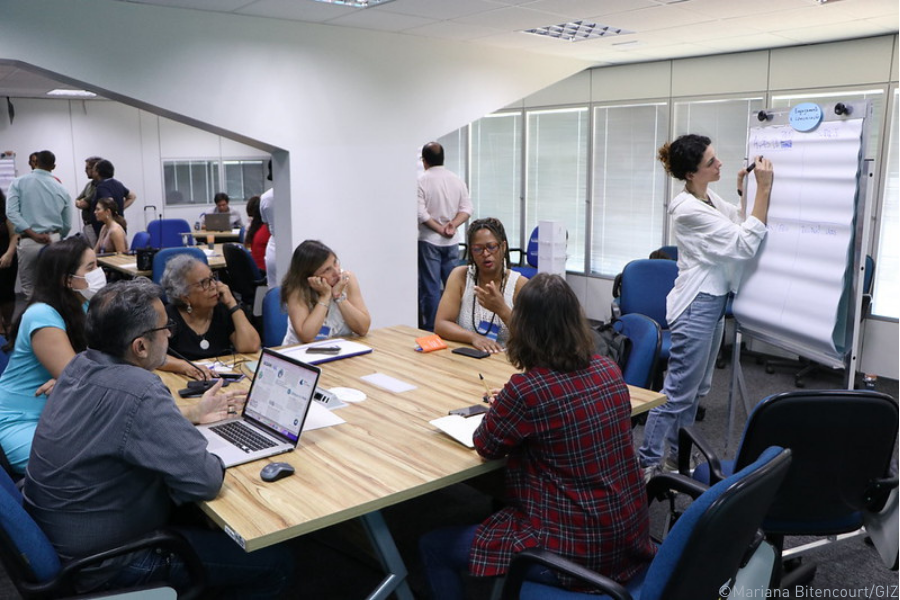
Furthermore, UNESCO supported the implementation of UNESCO-IOC’s MSP global Rapid Assessment Methodology in Brazil, in partnership with the Ministry of Environment and Climate Change, the Secretary of the Interministerial Commission for the Resources of the Sea, Brazil (CIRM) and the German Agency for International Cooperation (GIZ). This included the co-organization of a national workshop on 3-4 October in Rio de Janeiro, to co-develop an Action Plan to advance MSP in the country through collaborations with authorities, stakeholders and partners. Such an approach is key to crafting policy solutions that not only improve ocean health but also nurture economic development and social equity—core elements of the Sustainable Blue Economy. With over 70% of endangered species taking refuge in Marine Protected Areas, it’s clear that MSP is vital to safeguarding marine biodiversity and ensuring future food and energy security.

The United Nations Decade of Ocean Science for Sustainable Development is the primary global mechanism for advancing the generation and use of ocean knowledge for ocean sustainability. Coordinated by UNESCO-IOC, the Ocean Decade since 2020 has led to the launch of 48 global programmes, nearly 280 endorsed projects and close to 90 contributions of in-kind and financial resources. The 2024 UN Ocean Decade Conference in Spain set new priorities for co-designing science and solutions to address marine pollution, ecosystem impacts, sustainable aquatic food production, and a climate-resilient ocean economy, guiding efforts toward 2025 UNOC and beyond.
UNESCO therefore recognizes the importance of comprehensive MSP and ICZM in balancing blue/ocean-based economy activities through bilateral and multilateral collaboration and continues advancing these priorities at the G20.
Looking ahead, UNESCO remains deeply committed to advancing these priorities within the Brazilian G20 presidency and in future G20 engagements. By continuing to champion Marine Spatial Planning, the Blue Economy, and science-driven ocean governance, UNESCO aims to help shape a sustainable, resilient and inclusive future for our oceans and the communities that depend on them.
RELATED LINKS:
G20 Environment and Climate Ministers recognise MSP as principal for a Blue/Ocean-based Economy
CONTACT:
MSPglobal.comm@unesco.org