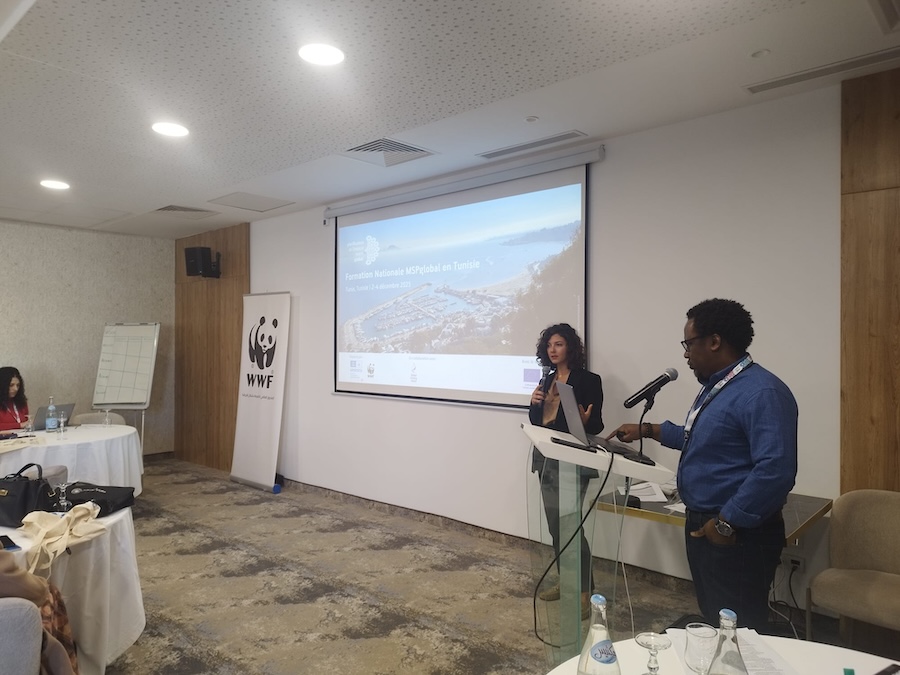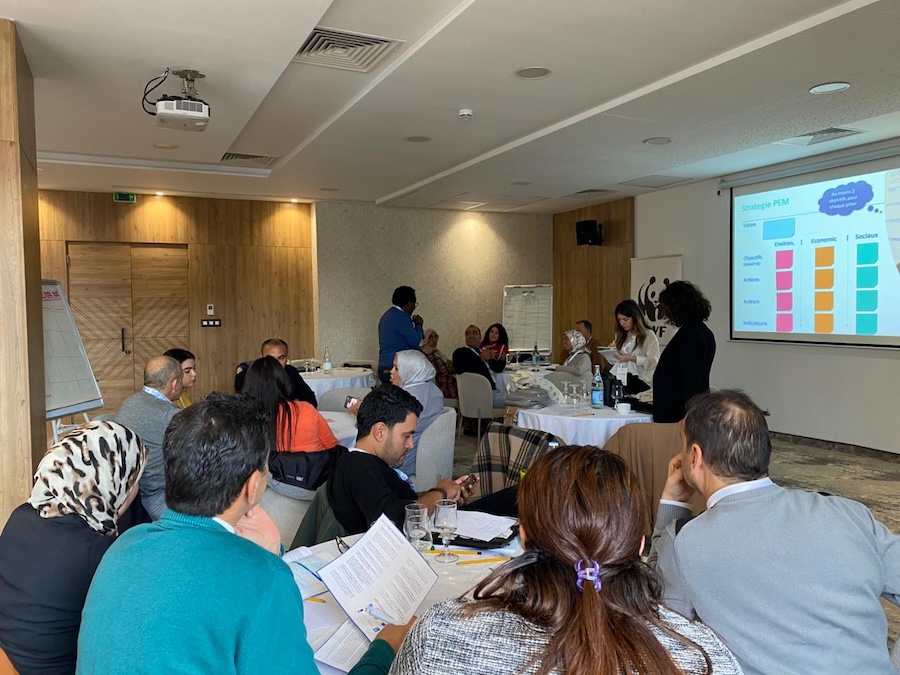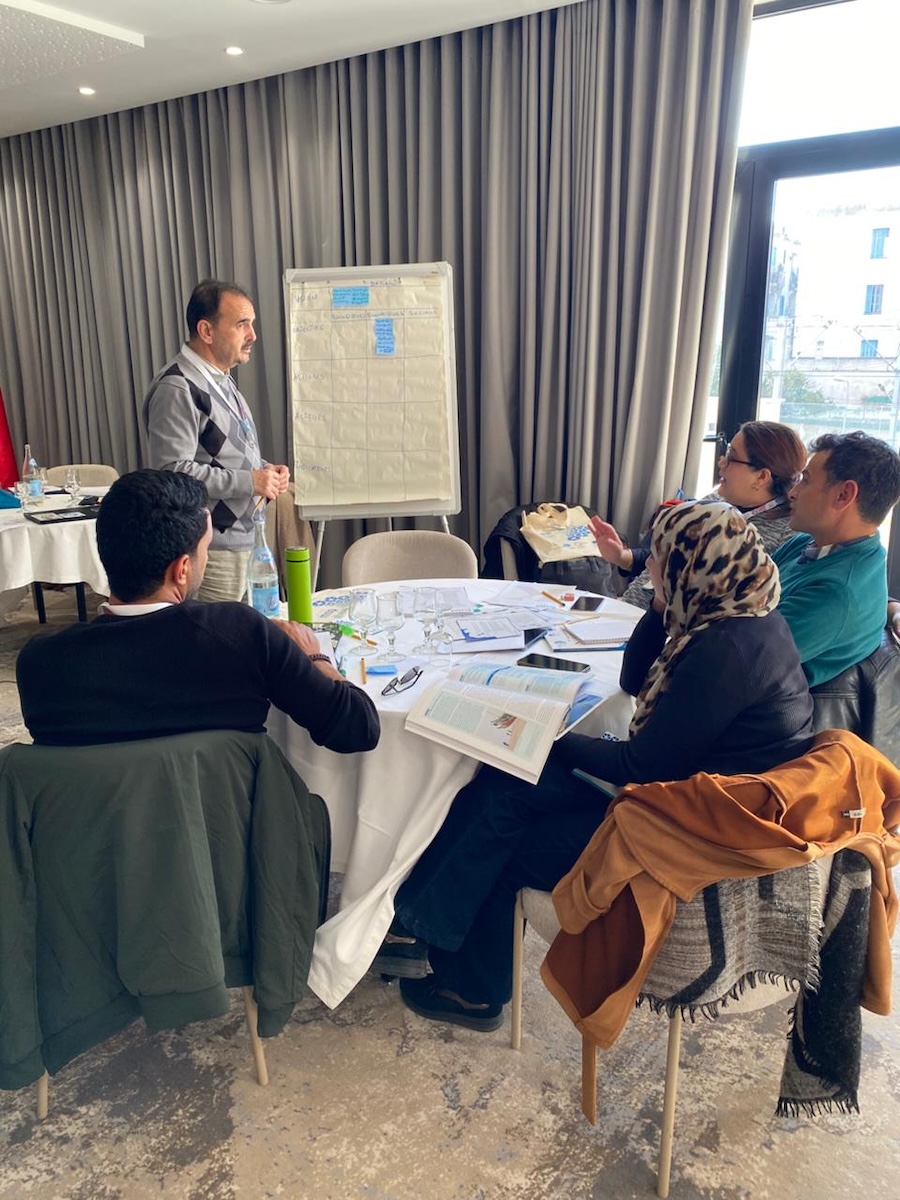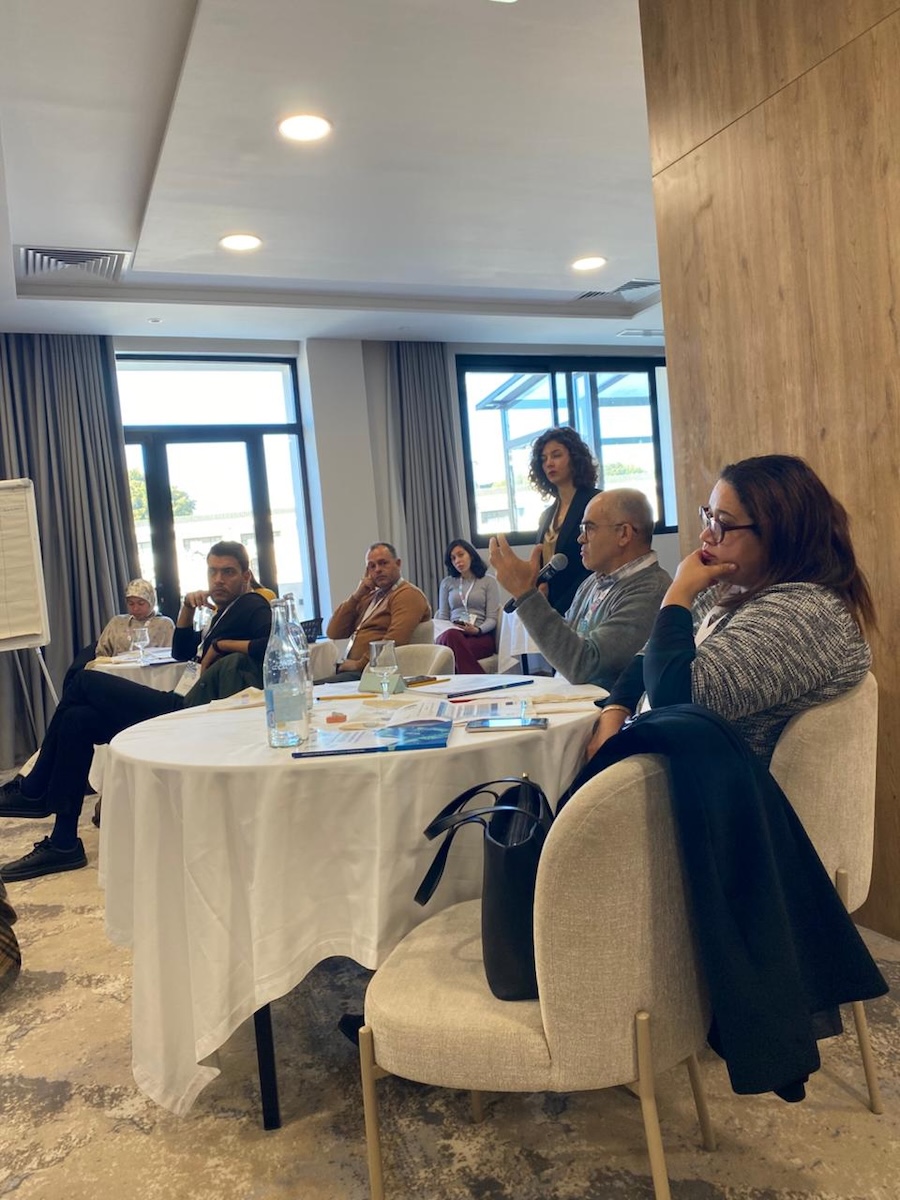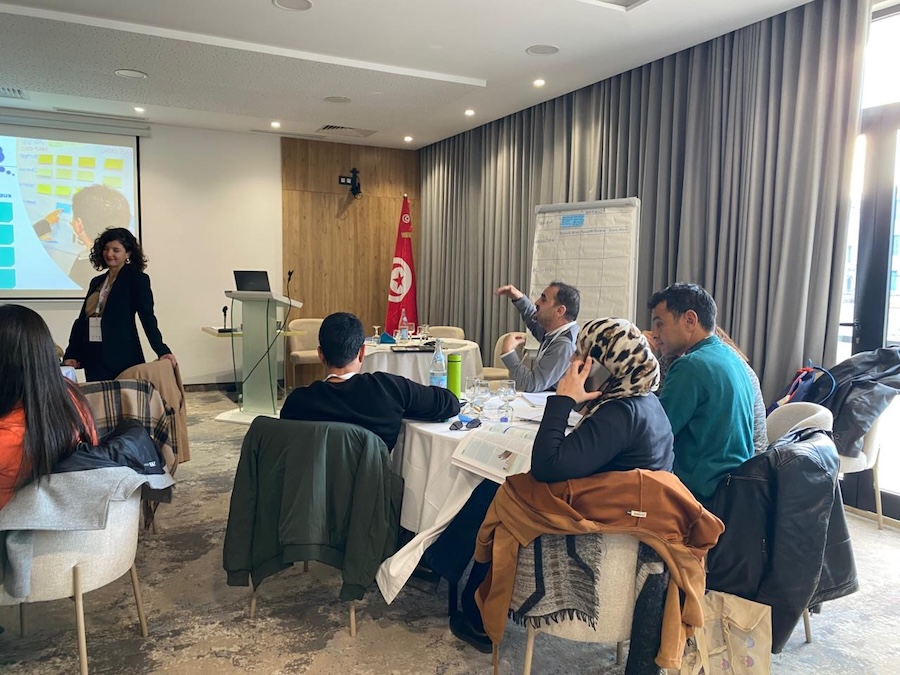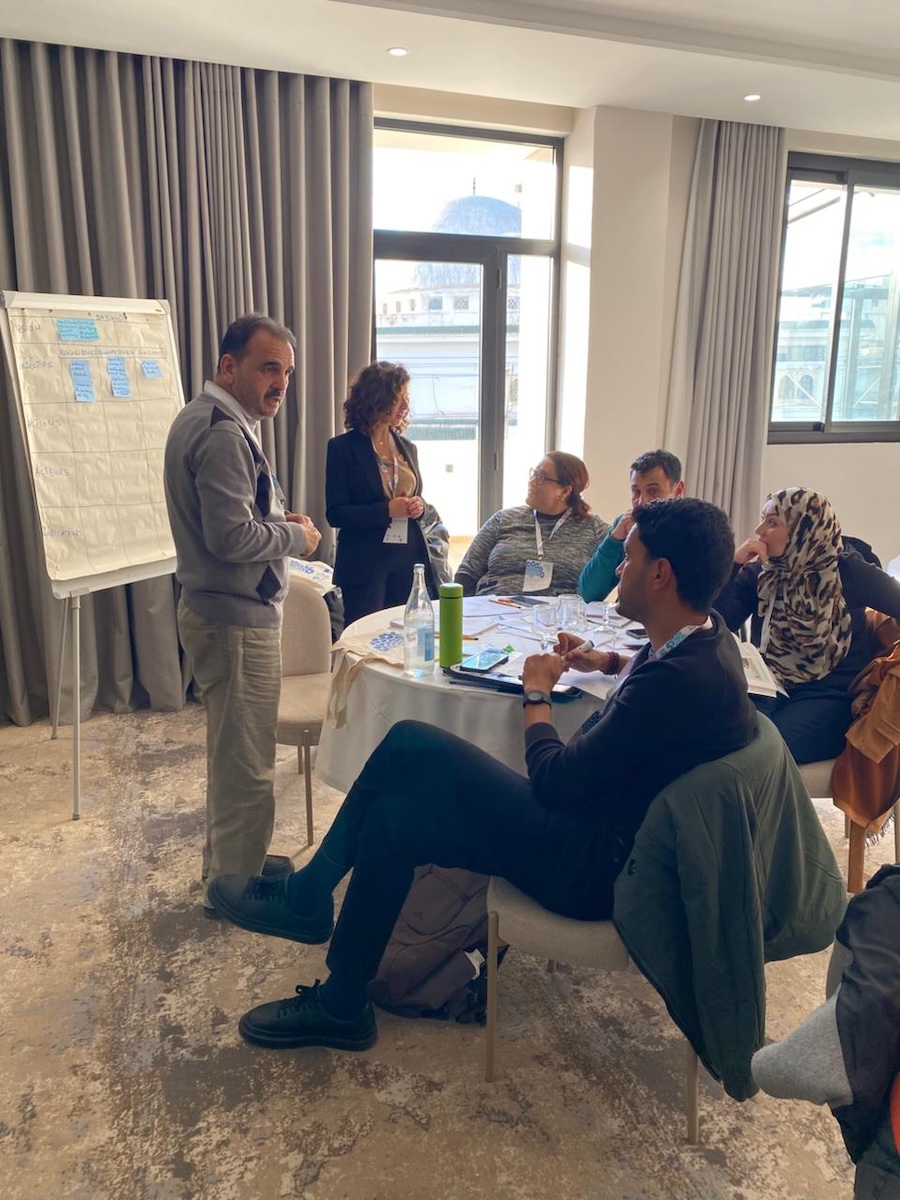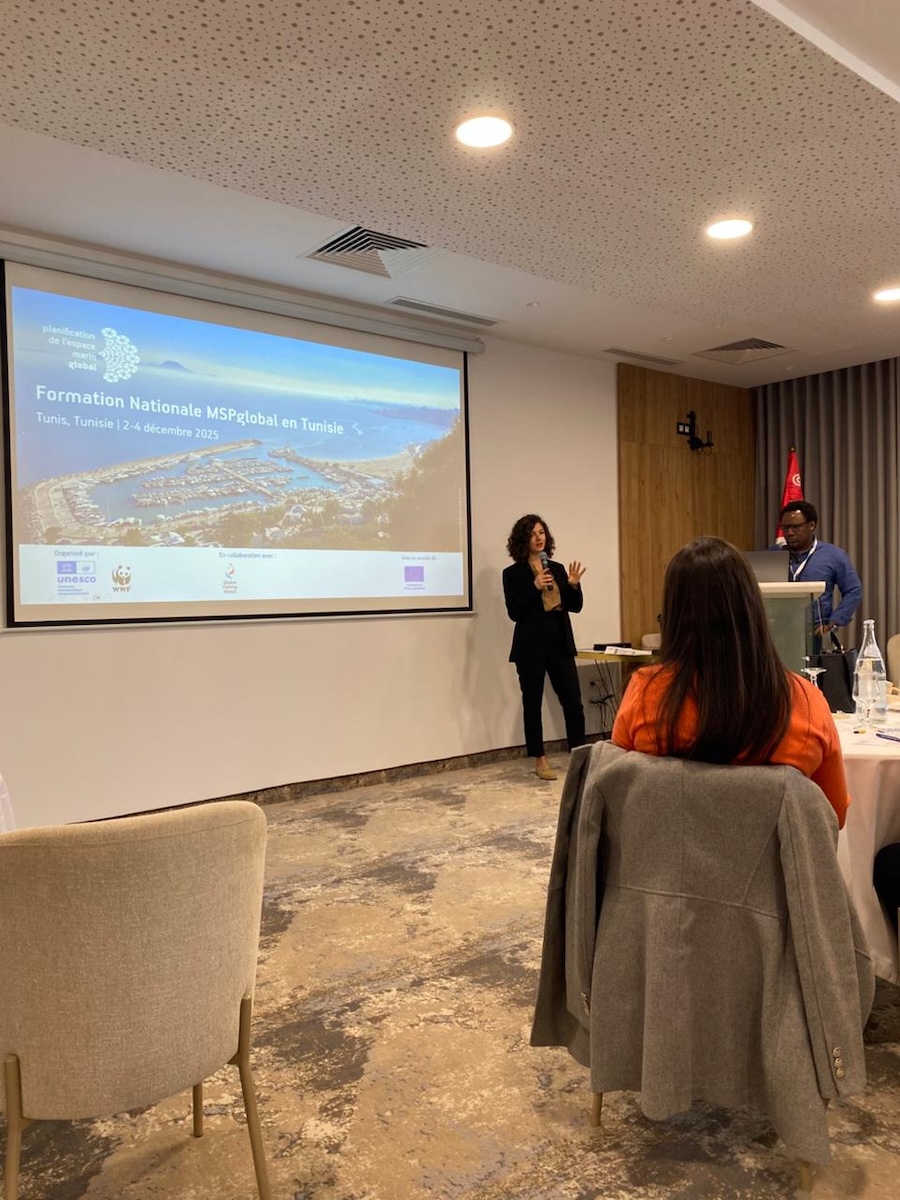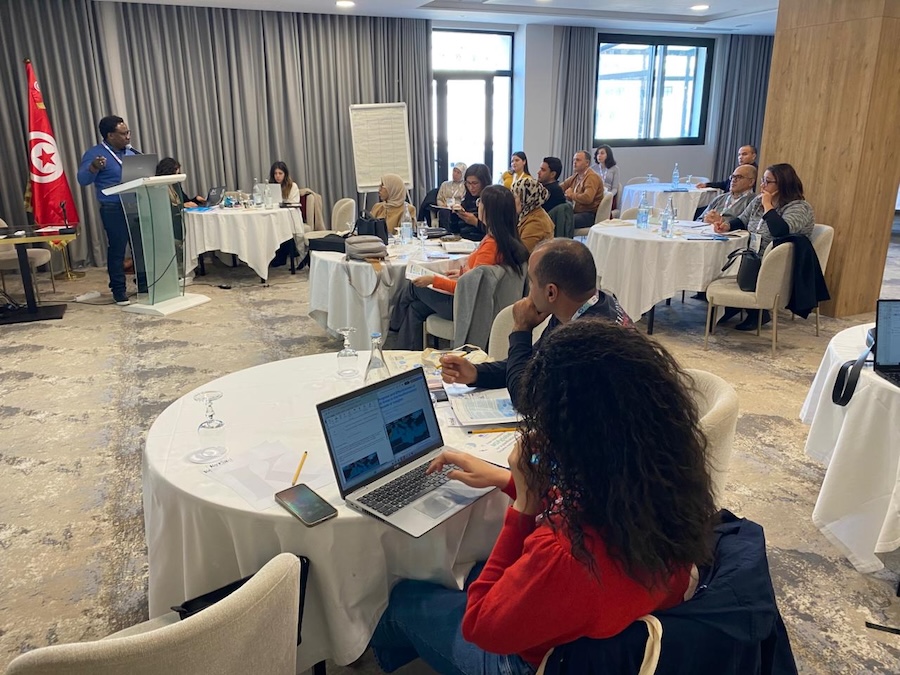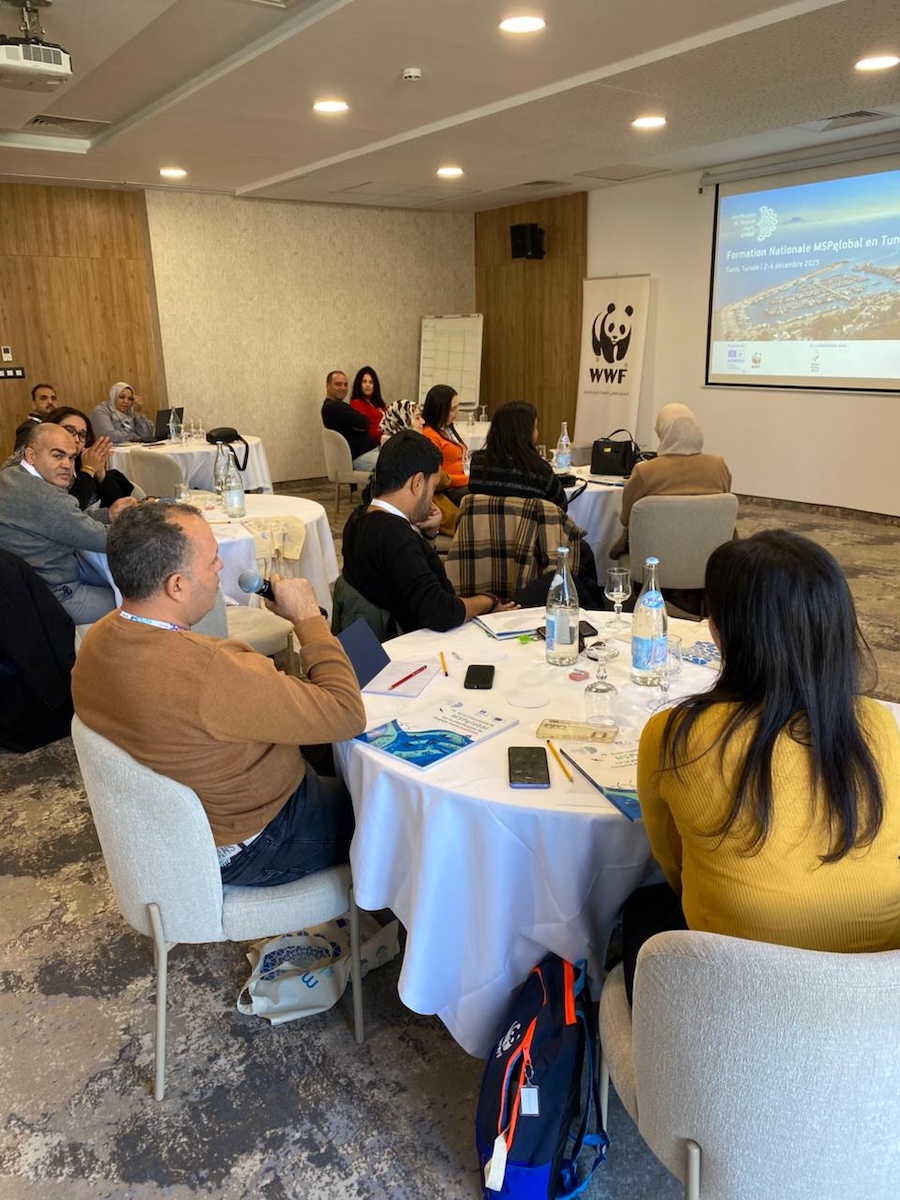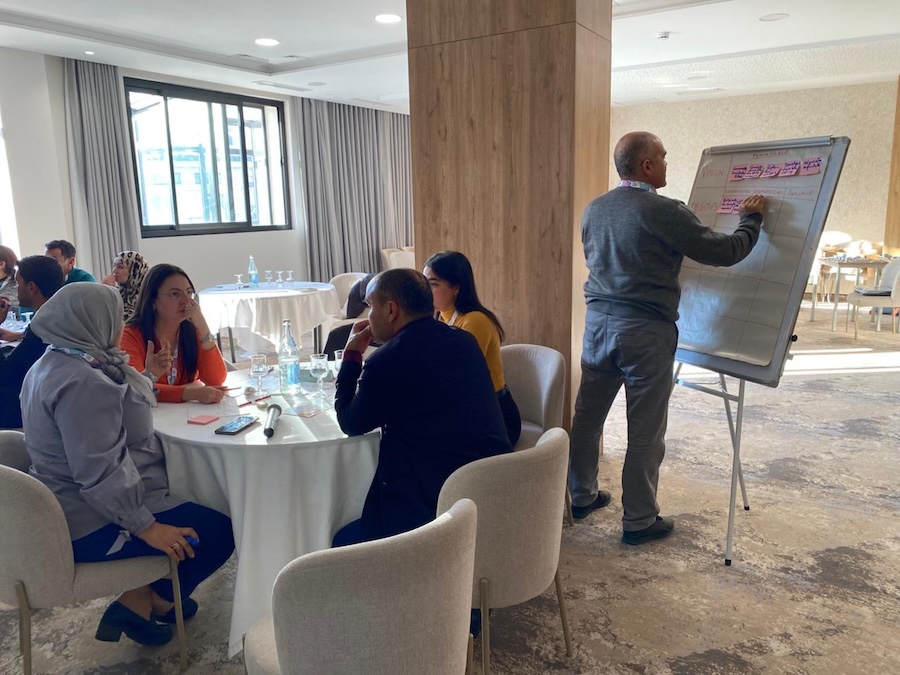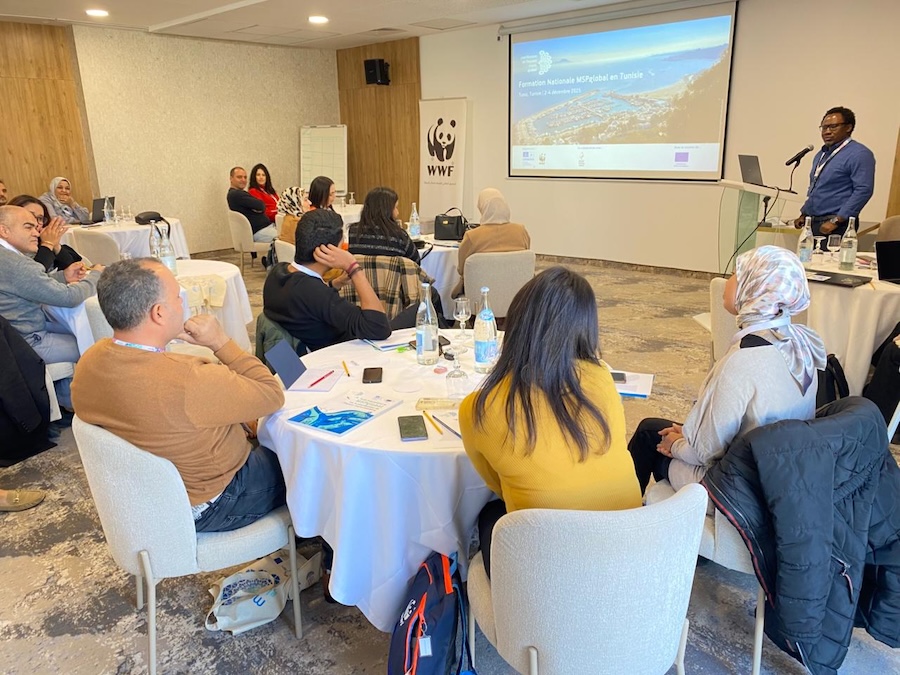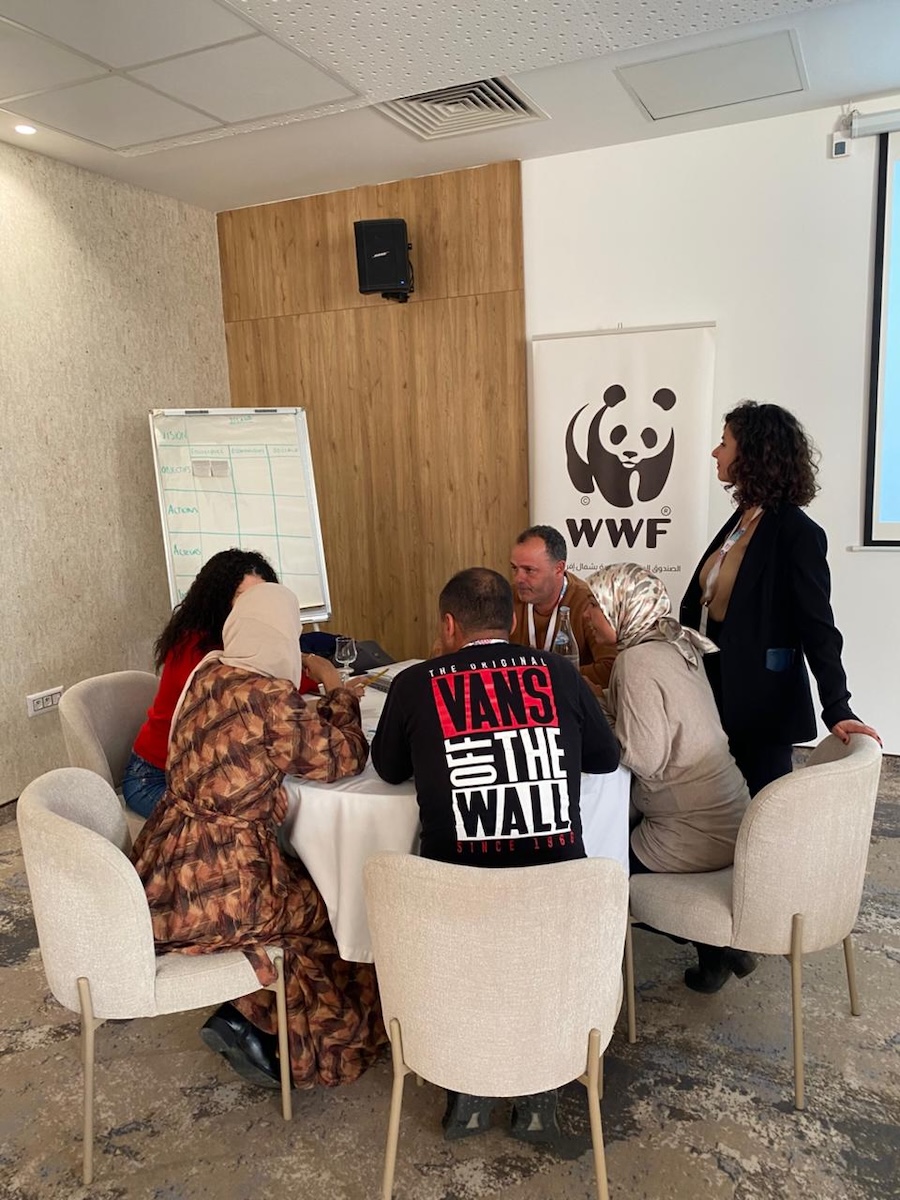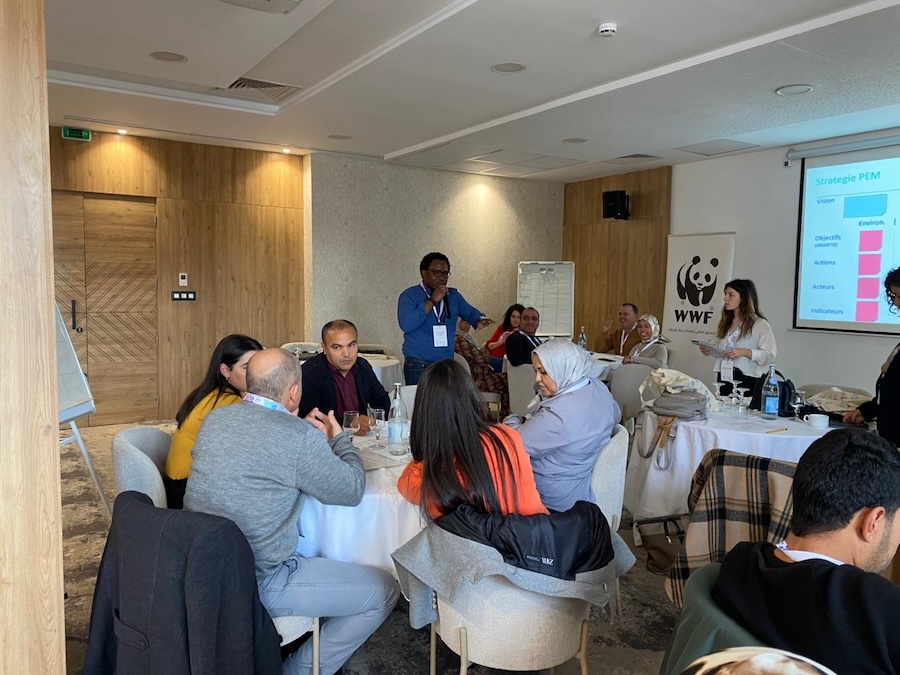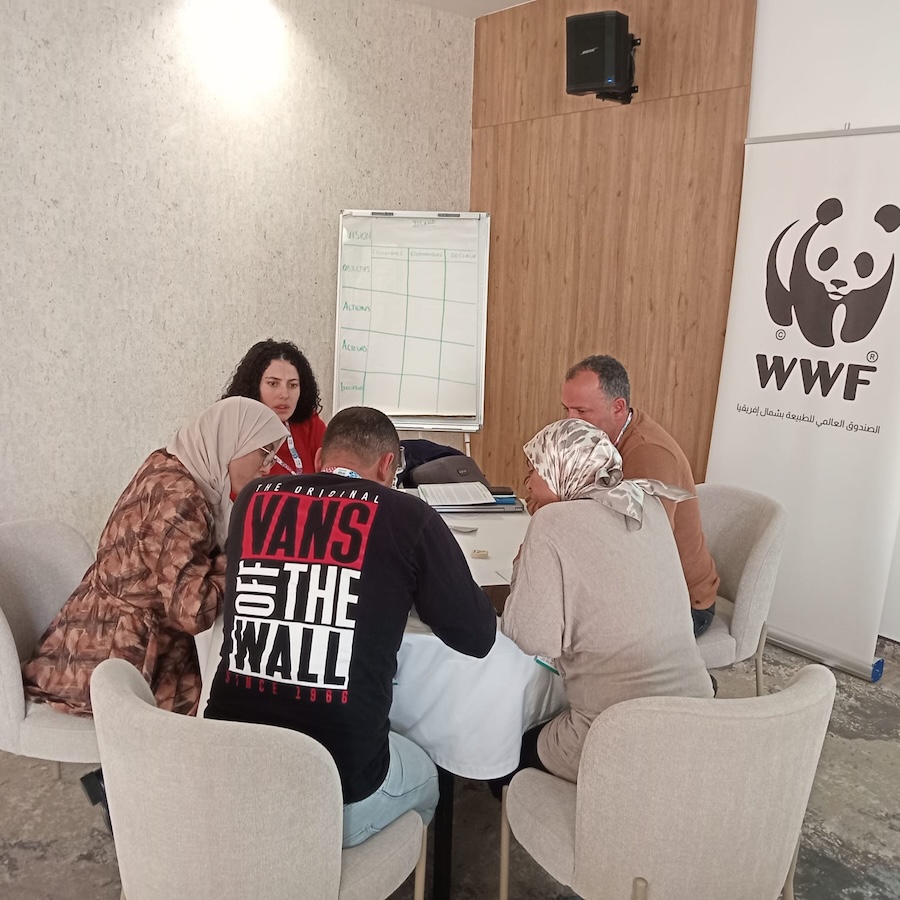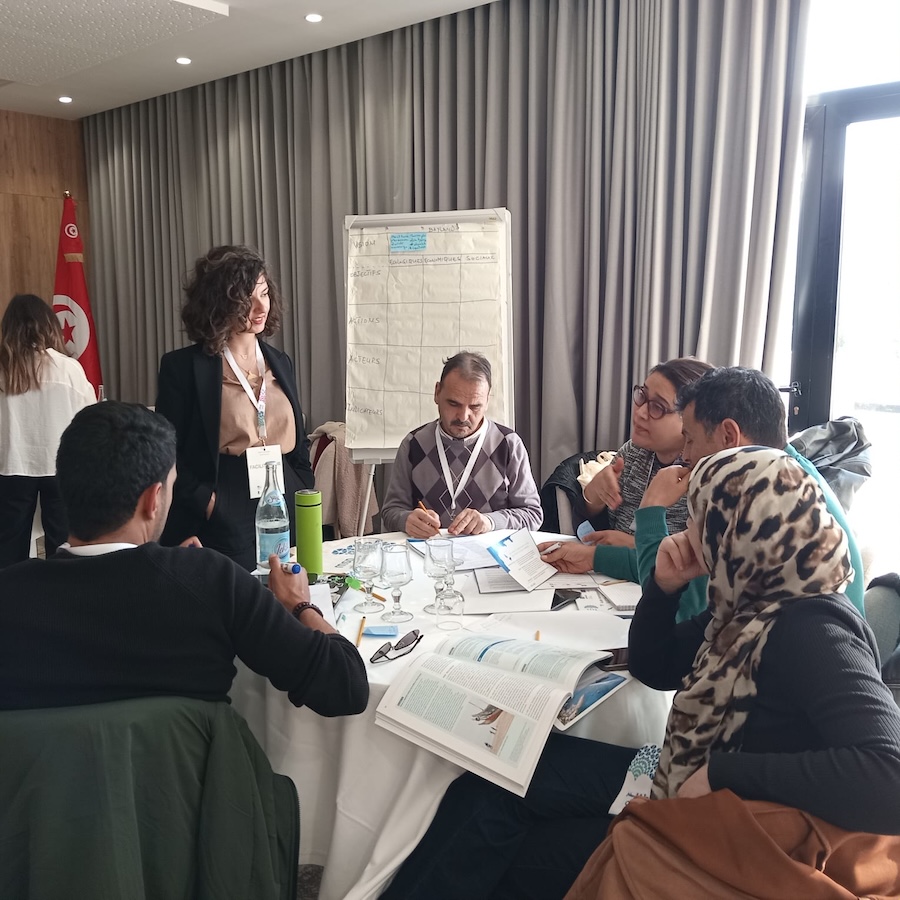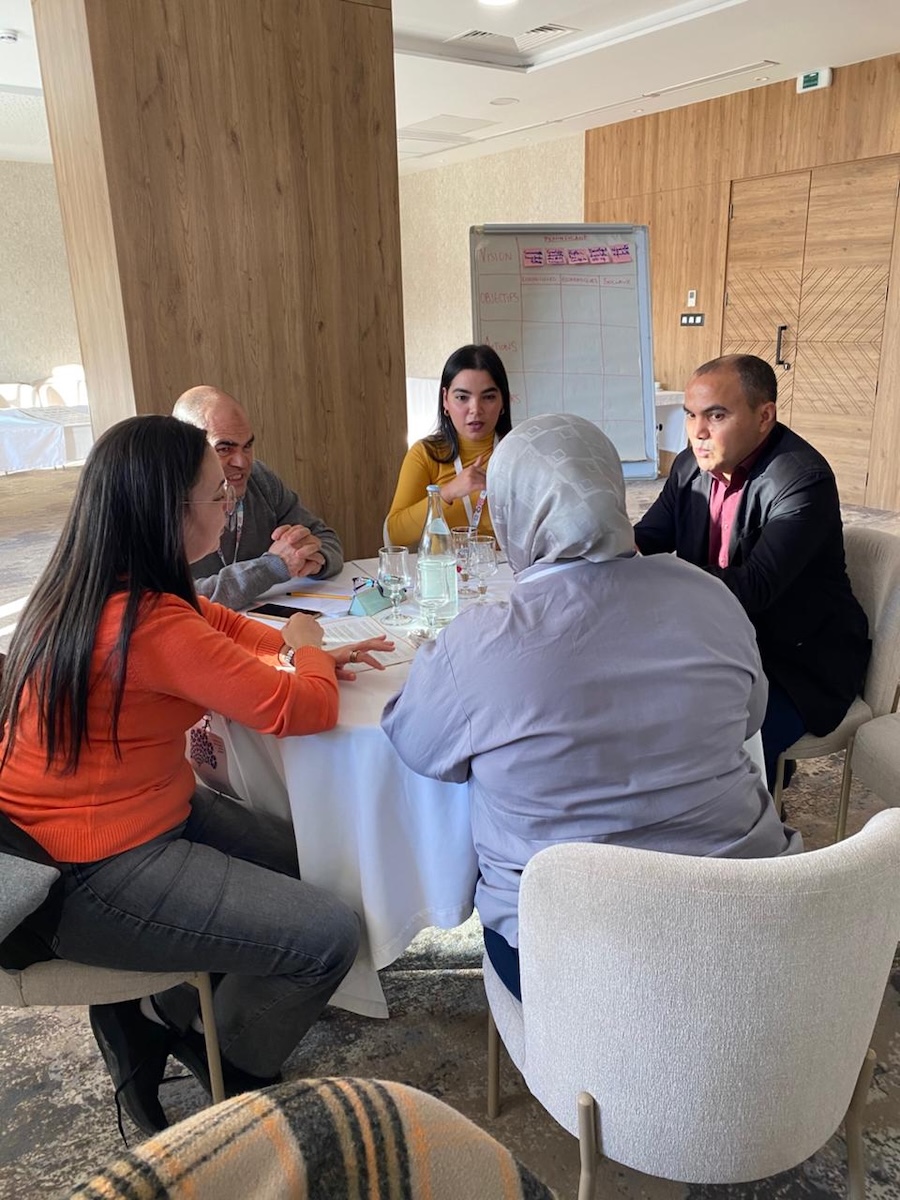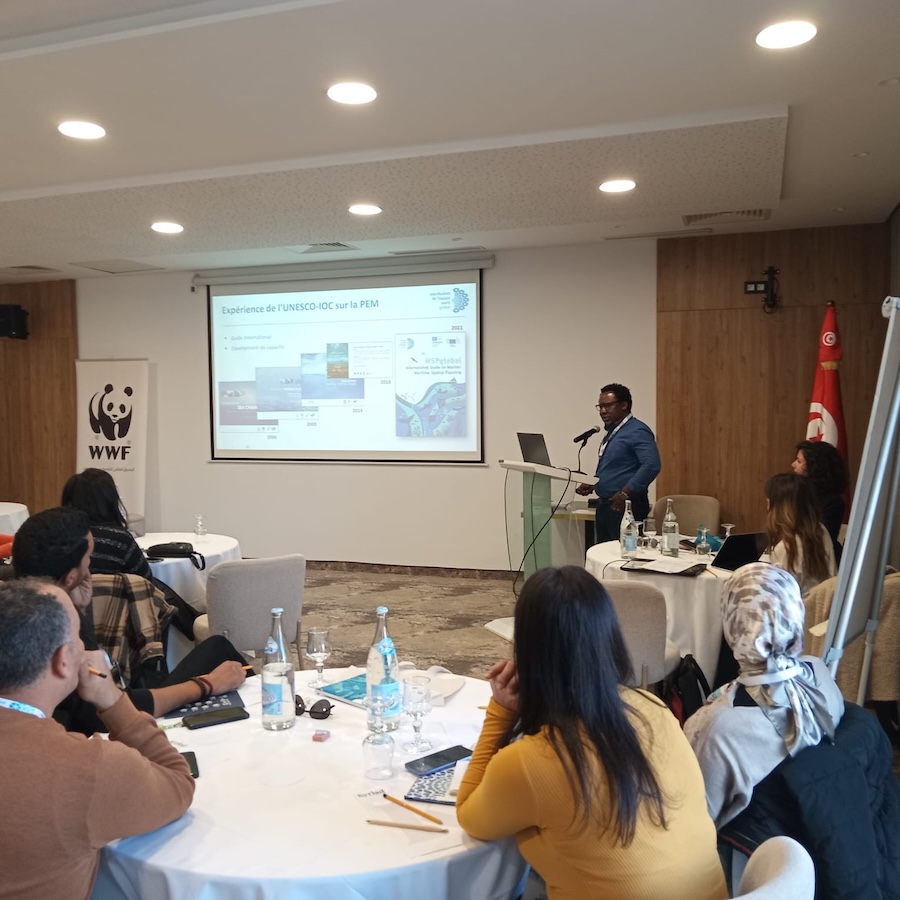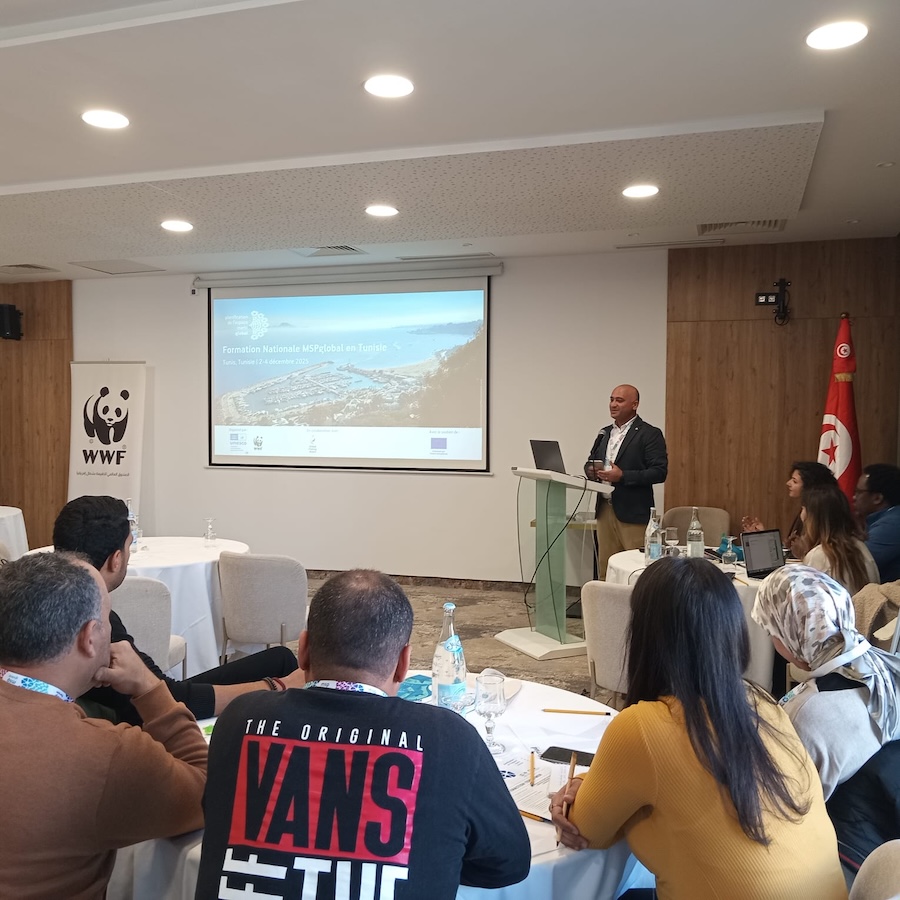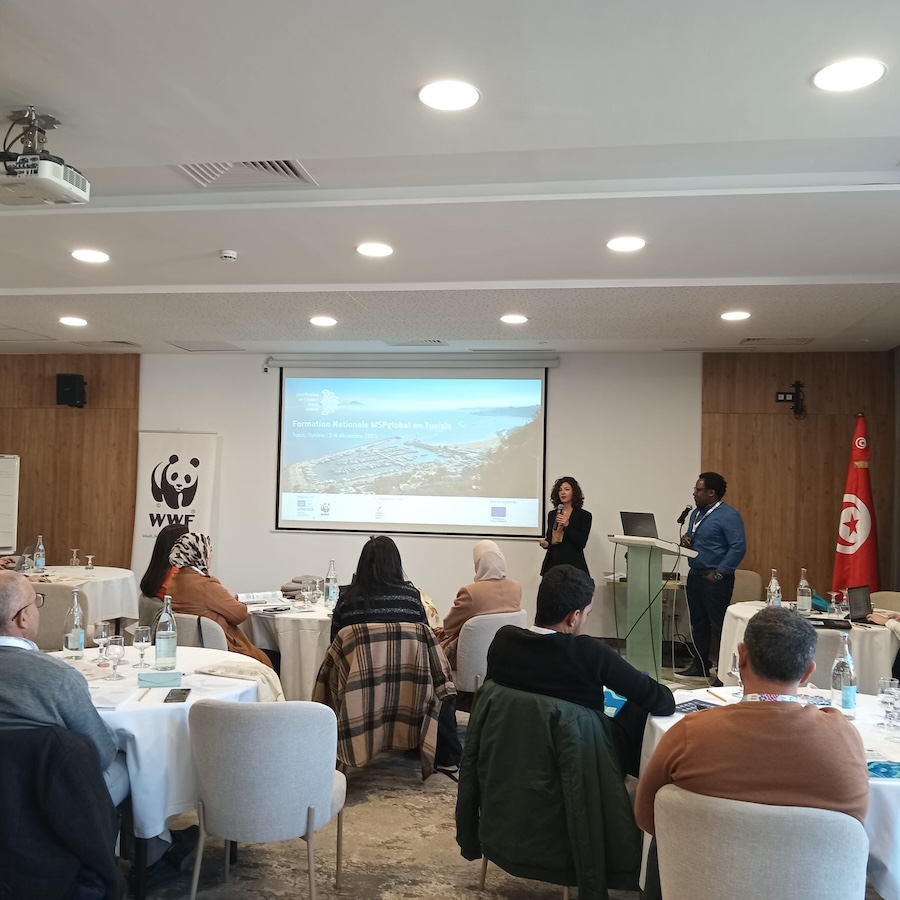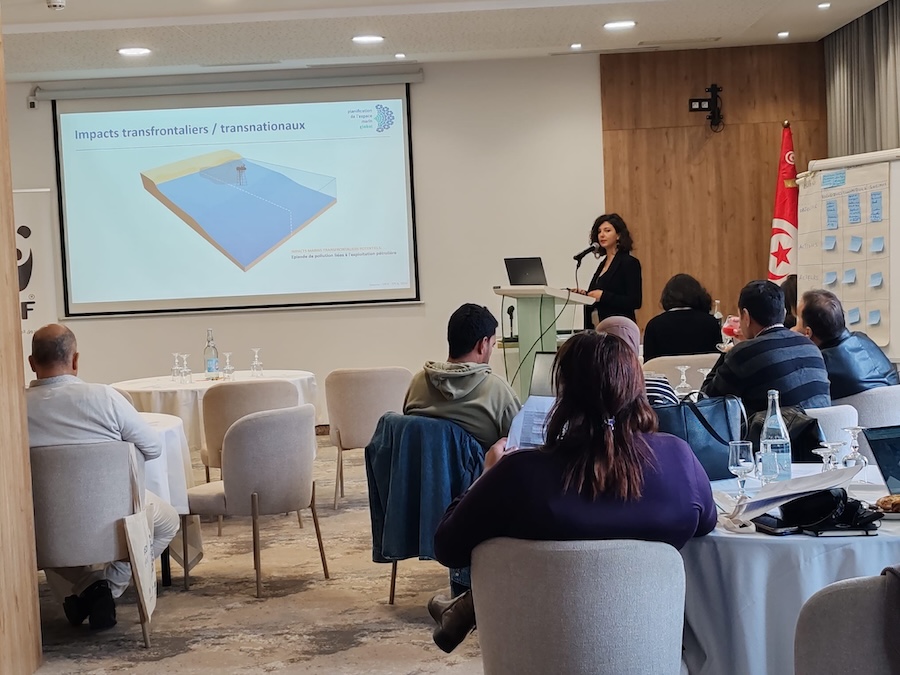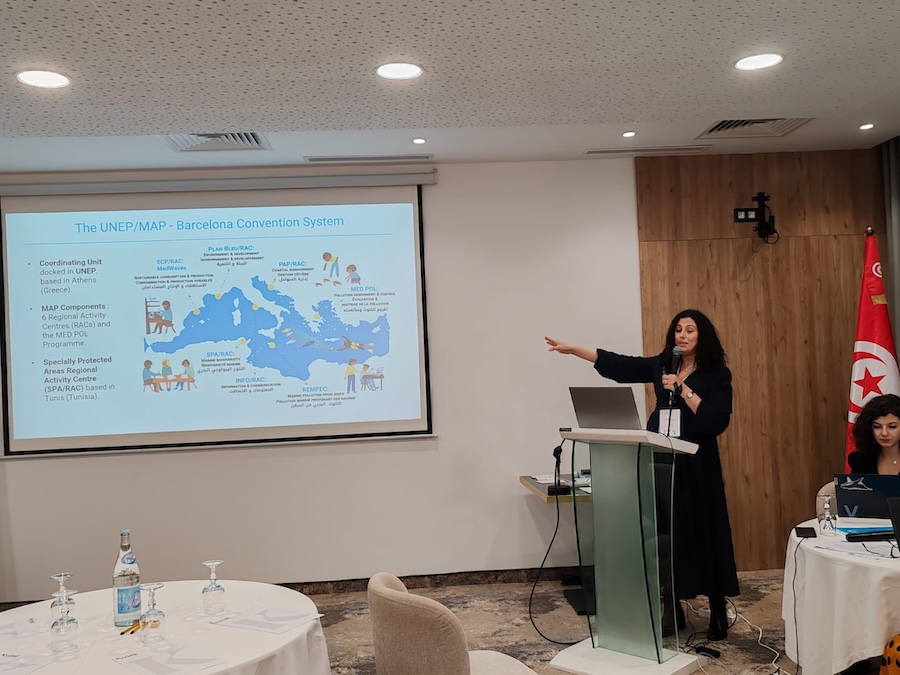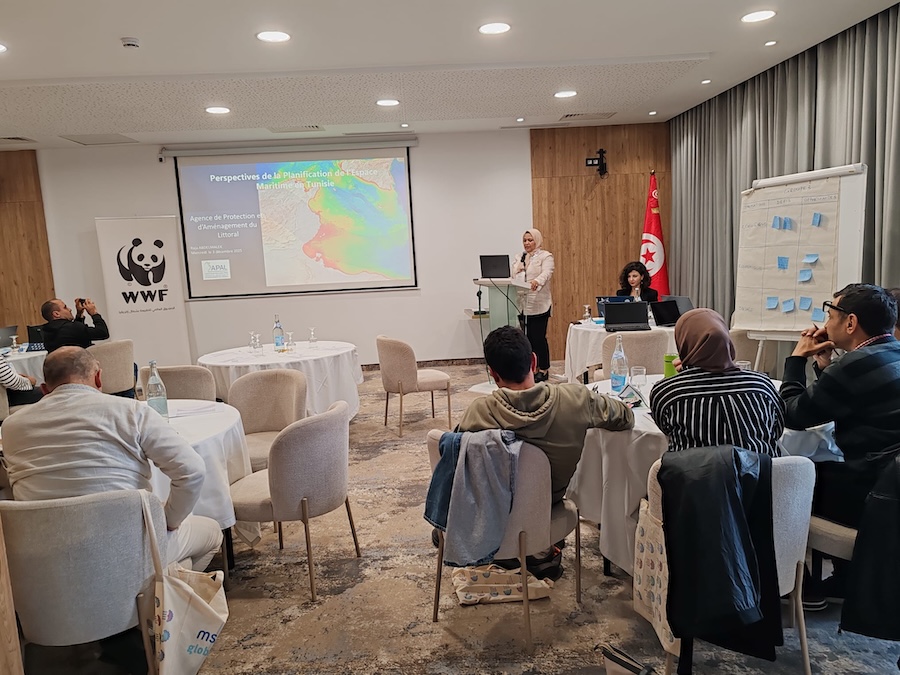


From 2-4 December 2025, a group of 24 participants gathered in Tunis for a capacity building workshop on Maritime Spatial Planning (MSP) organized by WWF Mediterranean and WWF North Africa, in collaboration with UNESCO-IOC’s MSPglobal Programme and with support from Global Fishing Watch. The goal was clear: strengthen MSP capacities in the Southern Mediterranean and support Tunisia’s growing momentum toward adopting MSP as a national planning tool.
The training placed a strong focus on the Gulf of Gabès – a region of exceptional ecological and socio economic importance. Its vast seagrass meadows, rich biodiversity, and productive fisheries make it one of the Mediterranean’s most valuable marine areas. Yet it is also one of the most pressured, facing overfishing, coastal development, pollution, and the impacts of climate change.
There is not yet a formal MSP framework in place in Tunisia, but the country’s ratification of the ICZM Protocol under the Barcelona Convention signals a clear commitment to integrated coastal and marine planning. For many participants, this workshop was a timely opportunity to advance ongoing national efforts, build shared understanding, and strengthen the capacities of those who will eventually shape Tunisia’s MSP process.
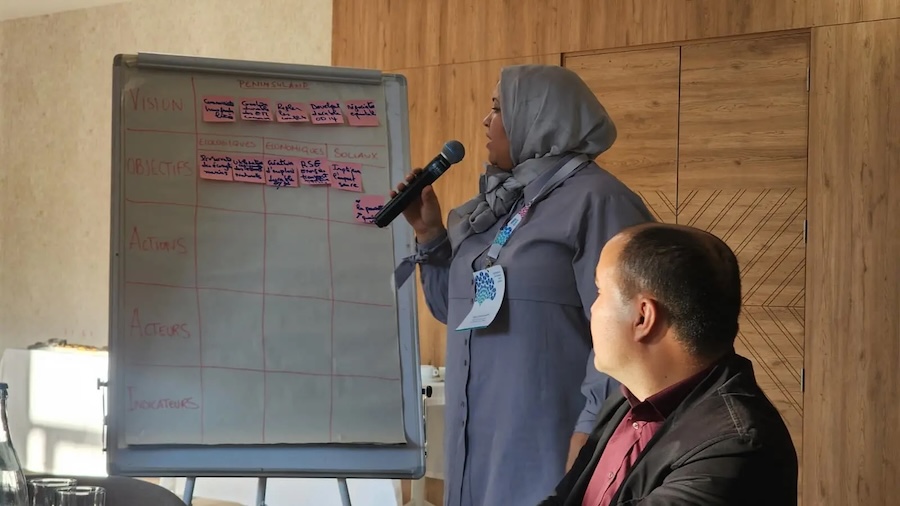
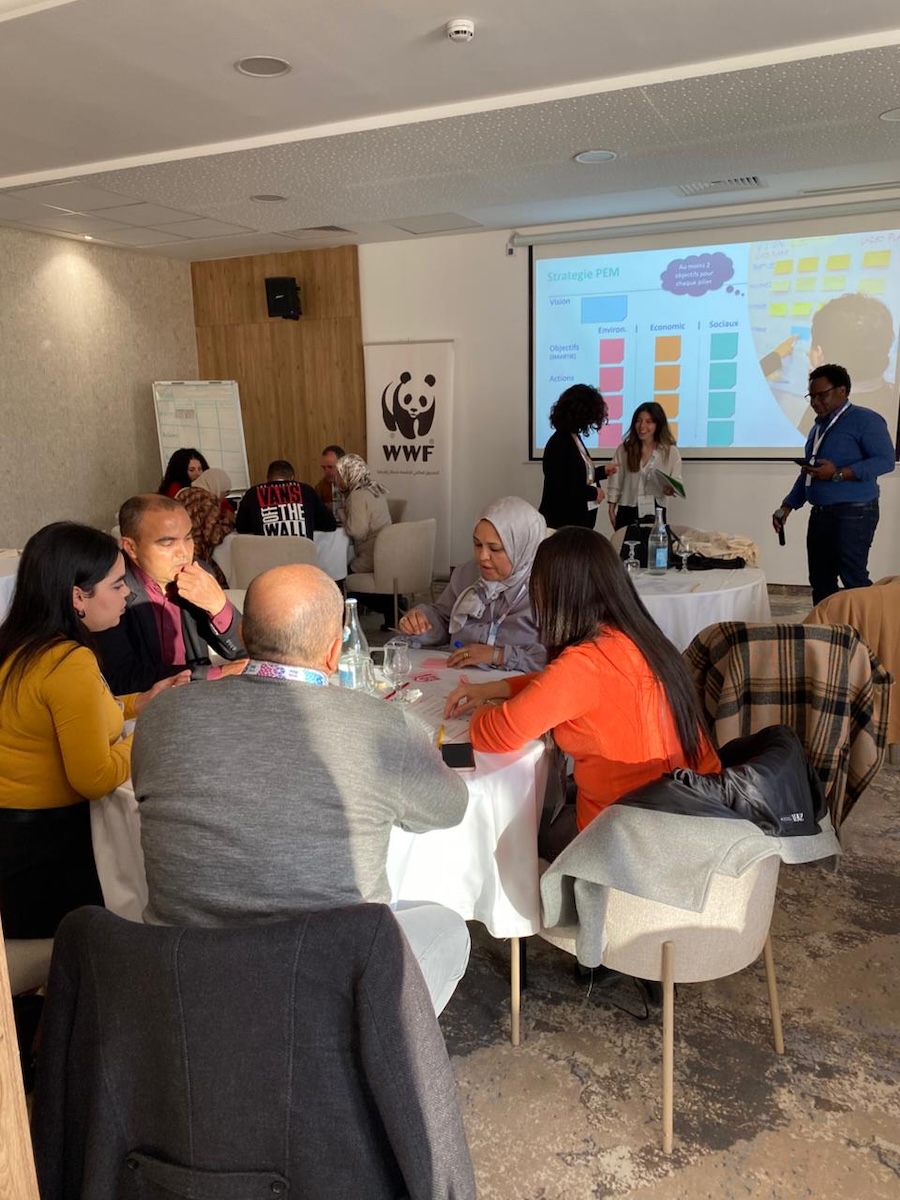
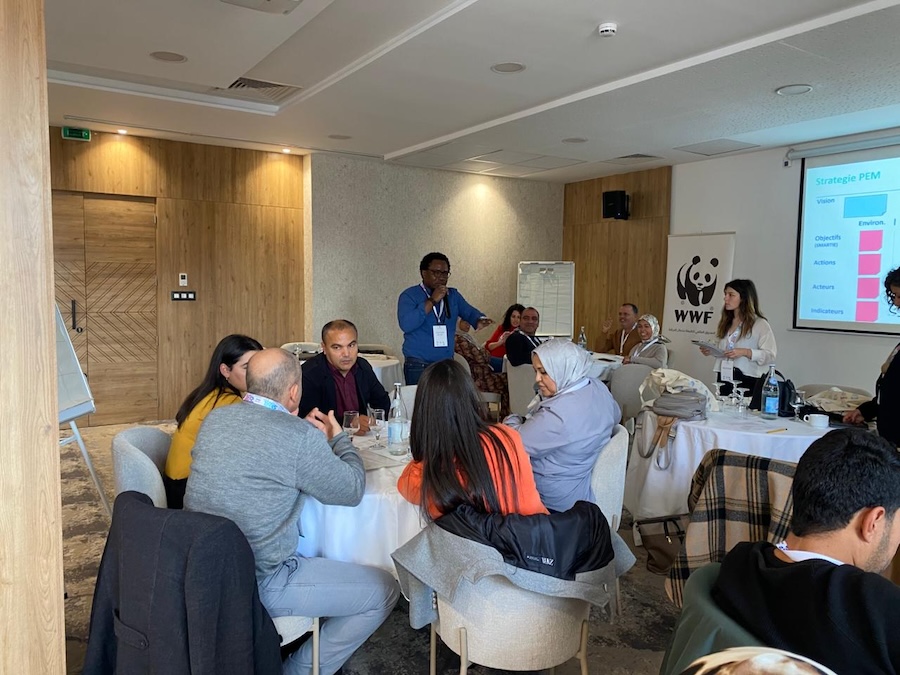
One of the most enriching aspects of the training was the diversity of participants. National and regional authorities, marine protected area managers, researchers, civil society representatives came together each bringing their own perspective, priorities, and experience. This mix created a dynamic environment where planning authorities could hear directly from those working on the ground, and where NGOs and researchers could better understand the constraints and responsibilities of decision makers. It was a reminder that MSP is not just a technical exercise; it is a social process that depends on dialogue, trust, and shared vision.
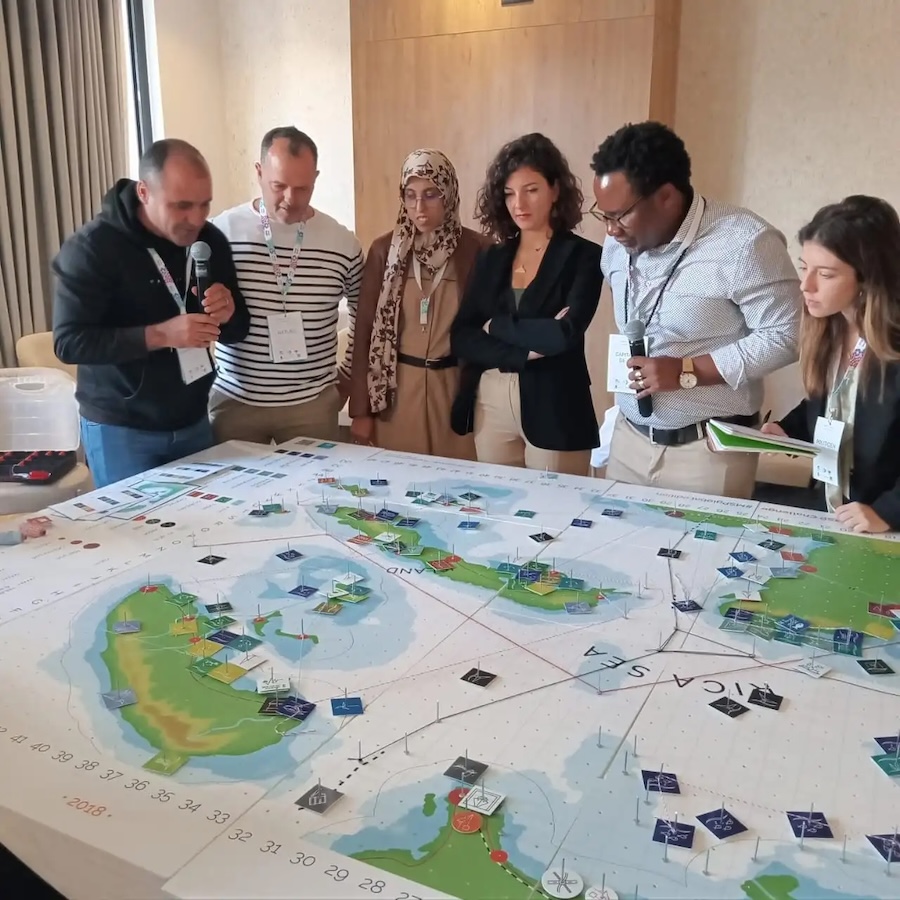
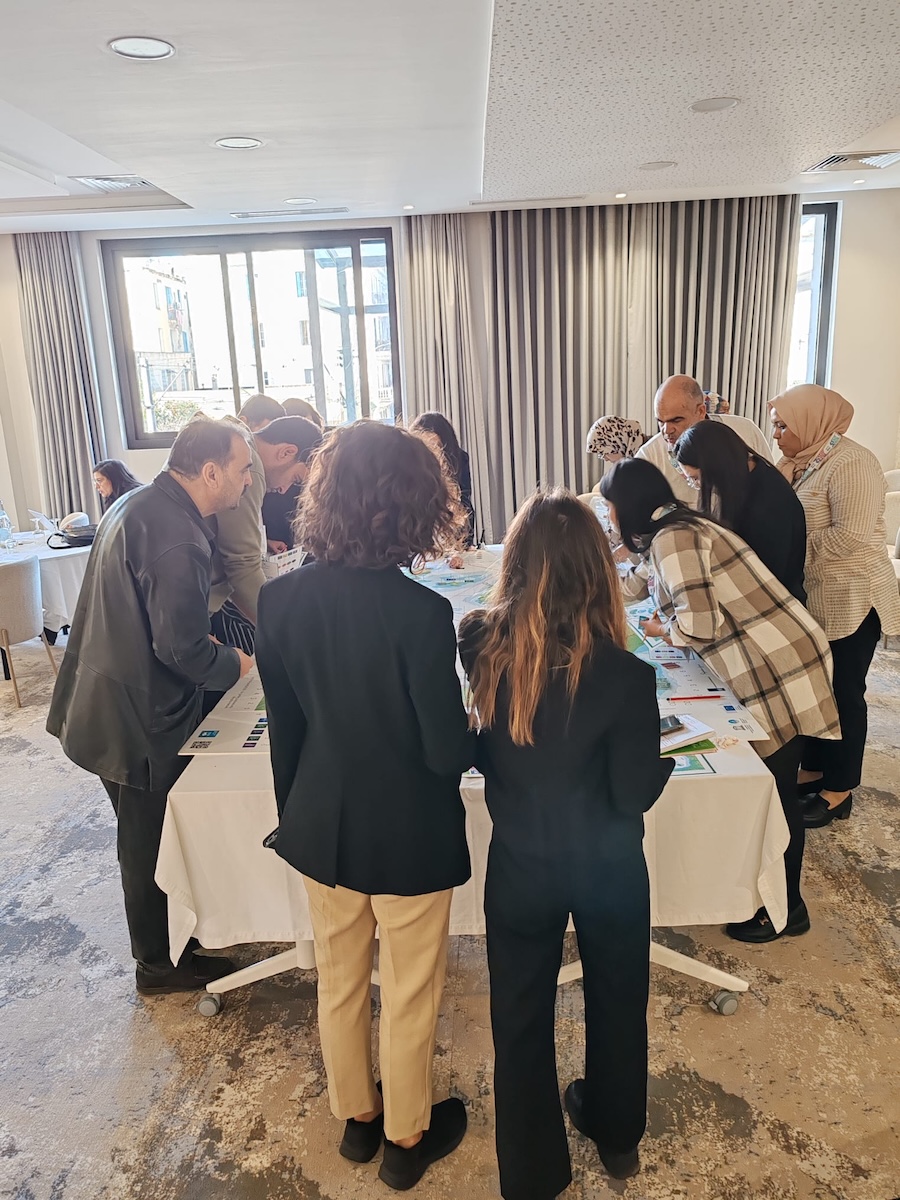
In brief, the first day of the workshop focused on the fundamentals of MSP, the second day was dedicated to the MSP Challenge Game, and the final day focused on integrating biodiversity into MSP – a central theme for sustainable planning.
Throughout the training, Tunisian national and regional authorities shared updates on the country’s emerging efforts toward MSP, showing a clear willingness to move forward and explore practical pathways for implementation. Inspiration from other Southern Mediterranean and non-EU regions – including the idea of piloting MSP in selected sites aligned with ICZM – offered concrete examples of how Tunisia could begin shaping its own approach.
These exchanges naturally fed into the closing reflections of the workshop. As Tunisia moves toward developing its MSP framework, the energy and engagement shown during these three days offer a promising foundation. The conversations sparked, the connections made, and the visions drafted will continue to shape the journey ahead. MSP is a long-term process, but this training marked an important step: building the shared understanding and collaborative spirit needed to plan a sustainable future for the Gulf of Gabès and the wider Southern Mediterranean.